Adler Graduate School
Responsive website redesign and content strategy for Adler Graduate School, a graduate institution specializing in Adlerian psychology and mental health education.
Overview
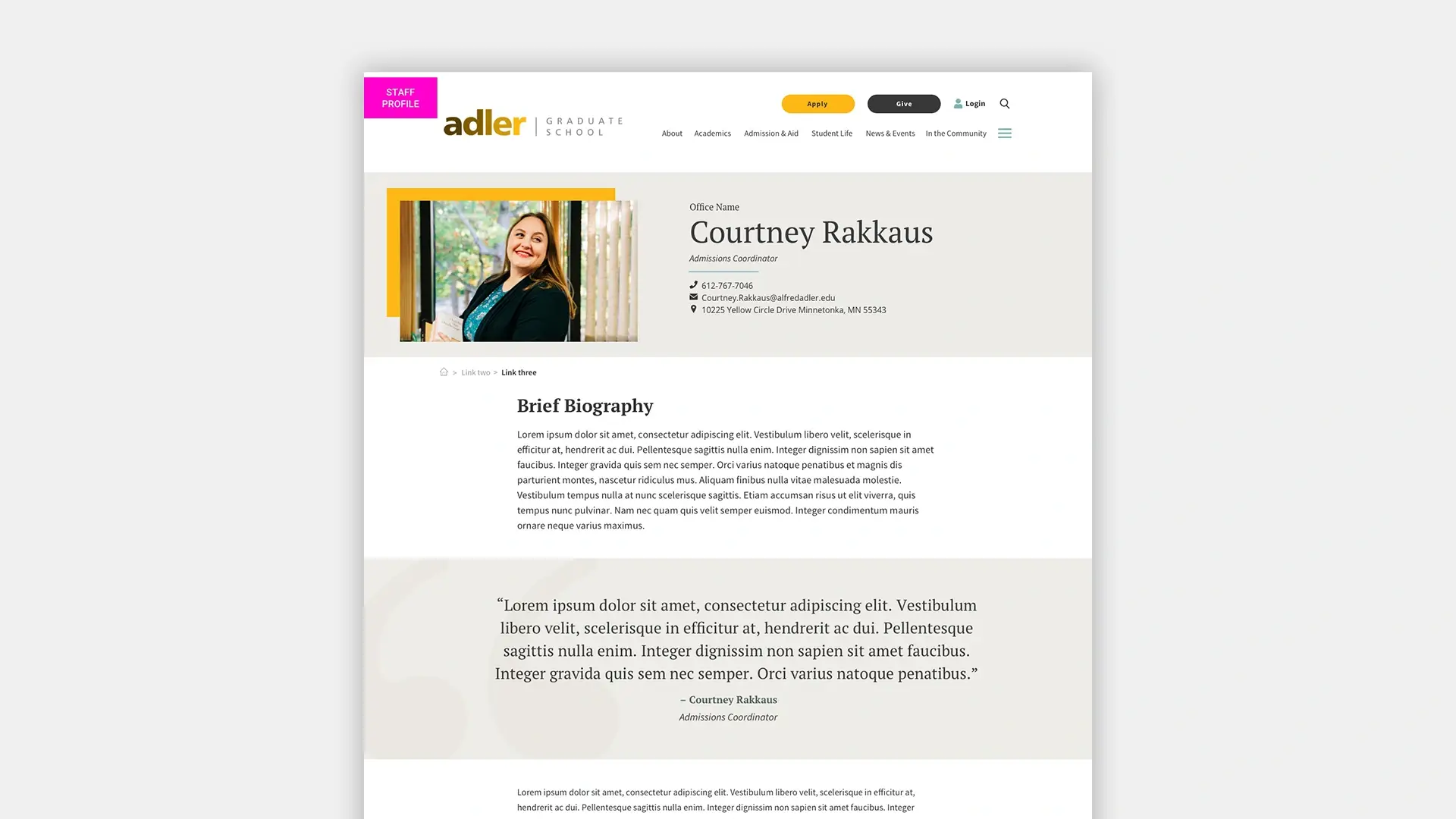
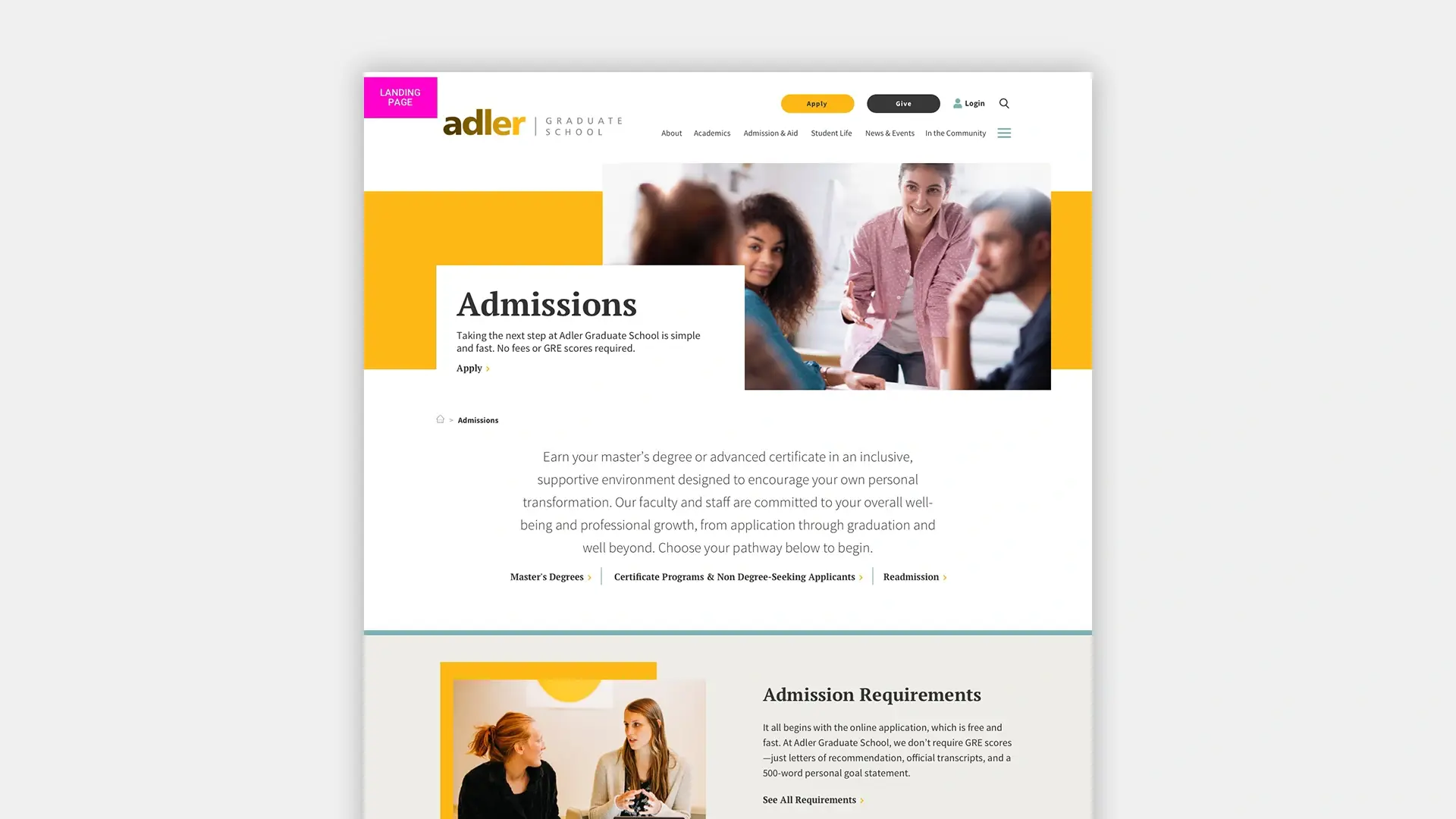
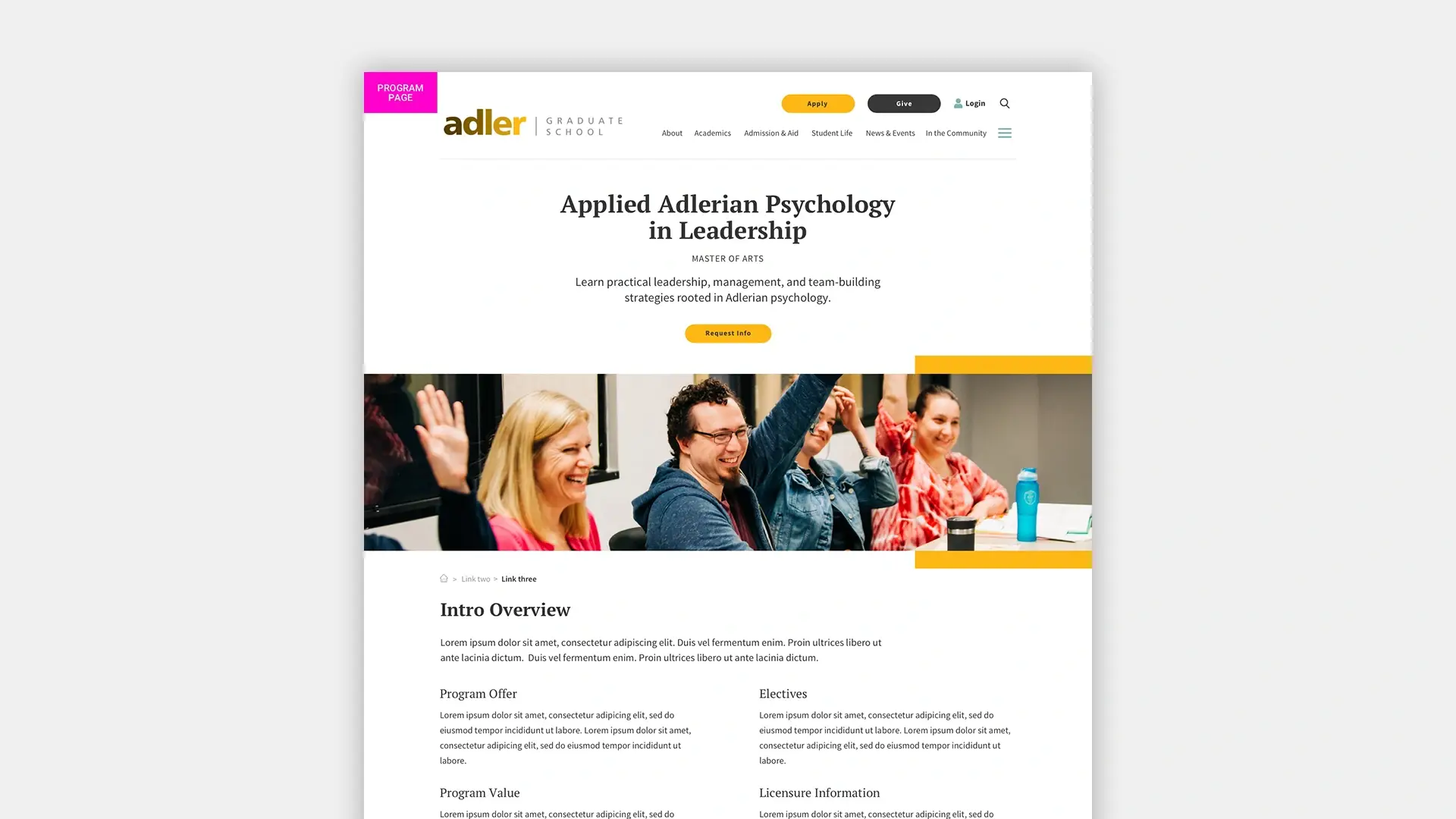
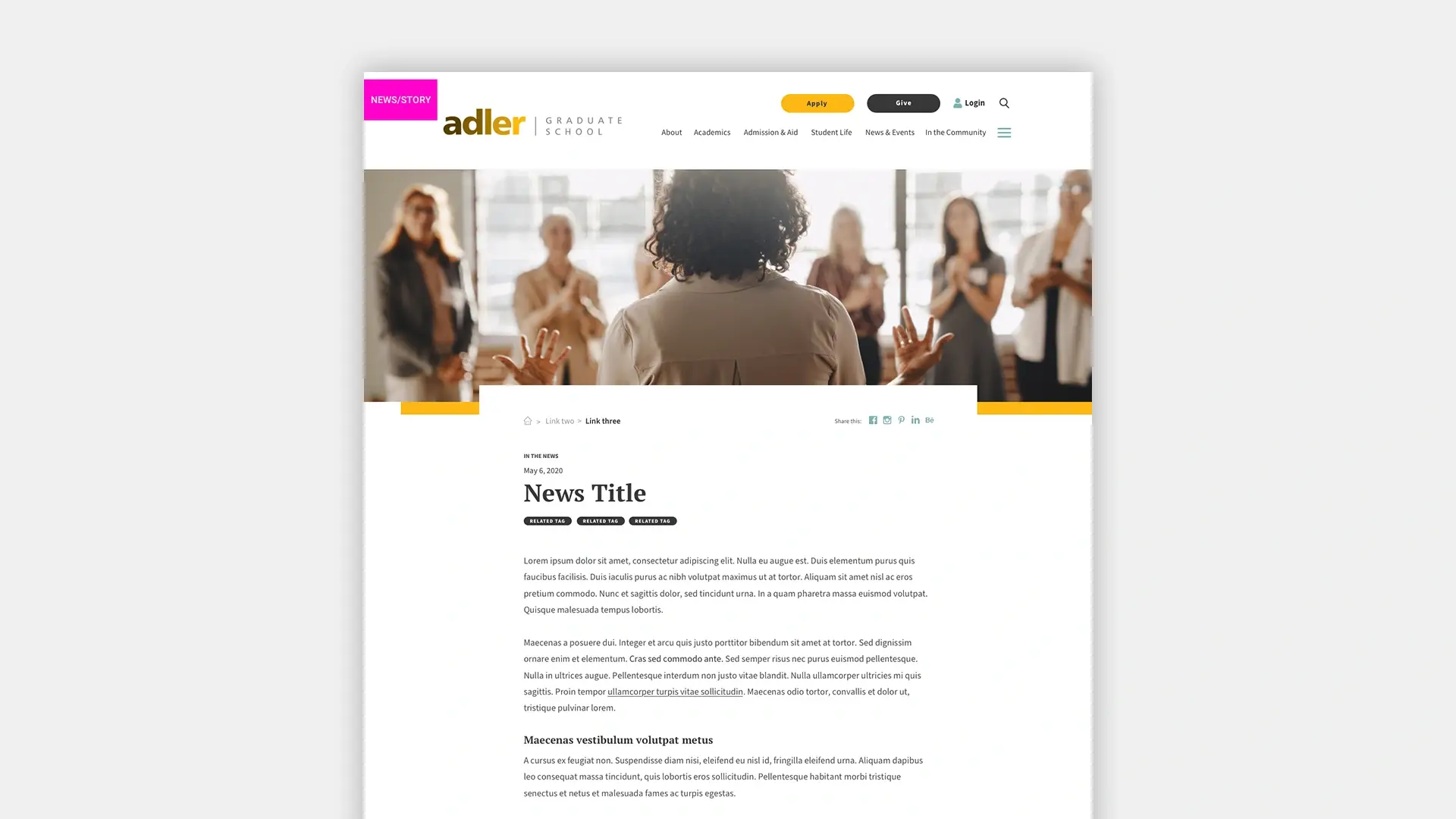
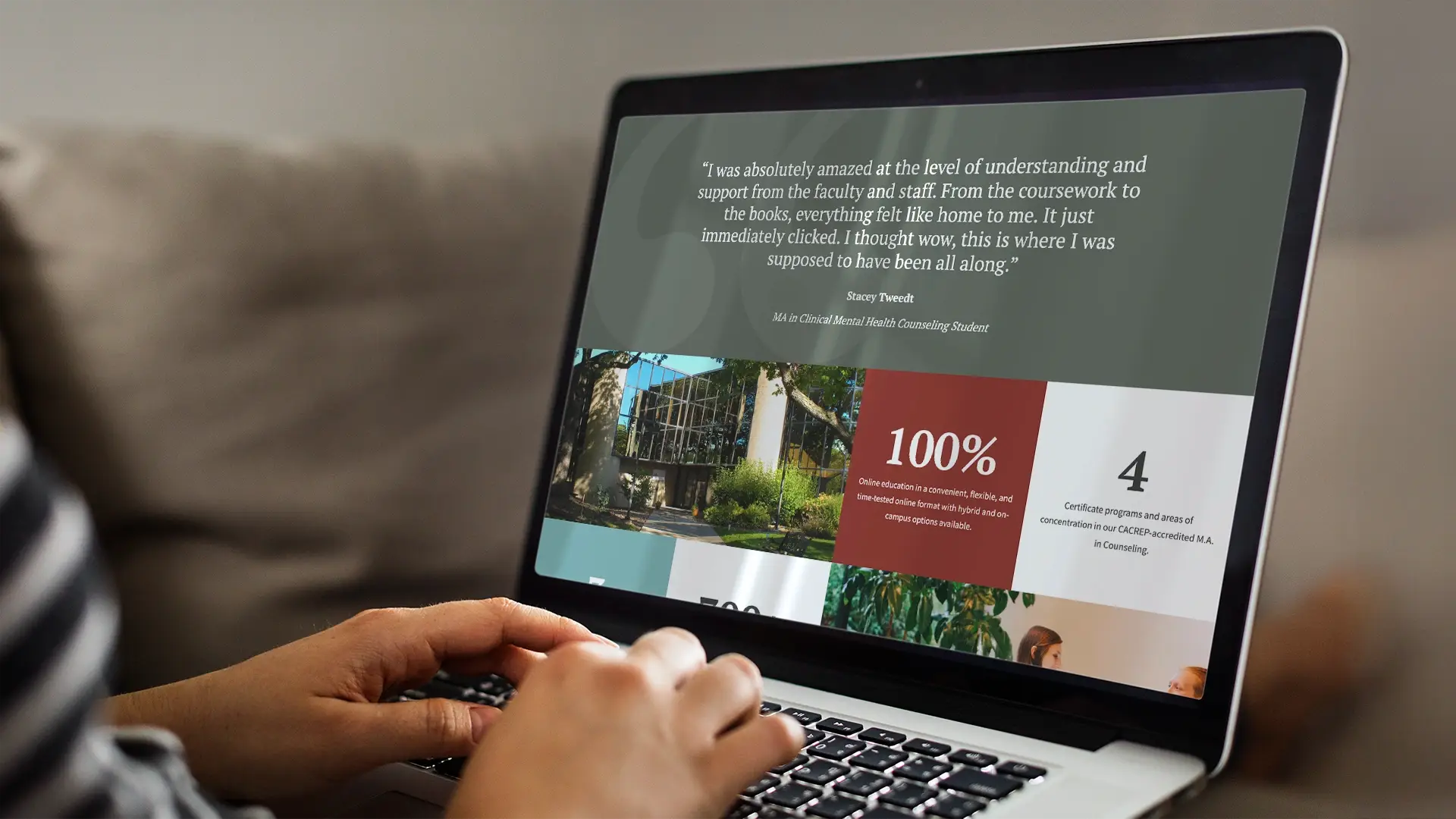
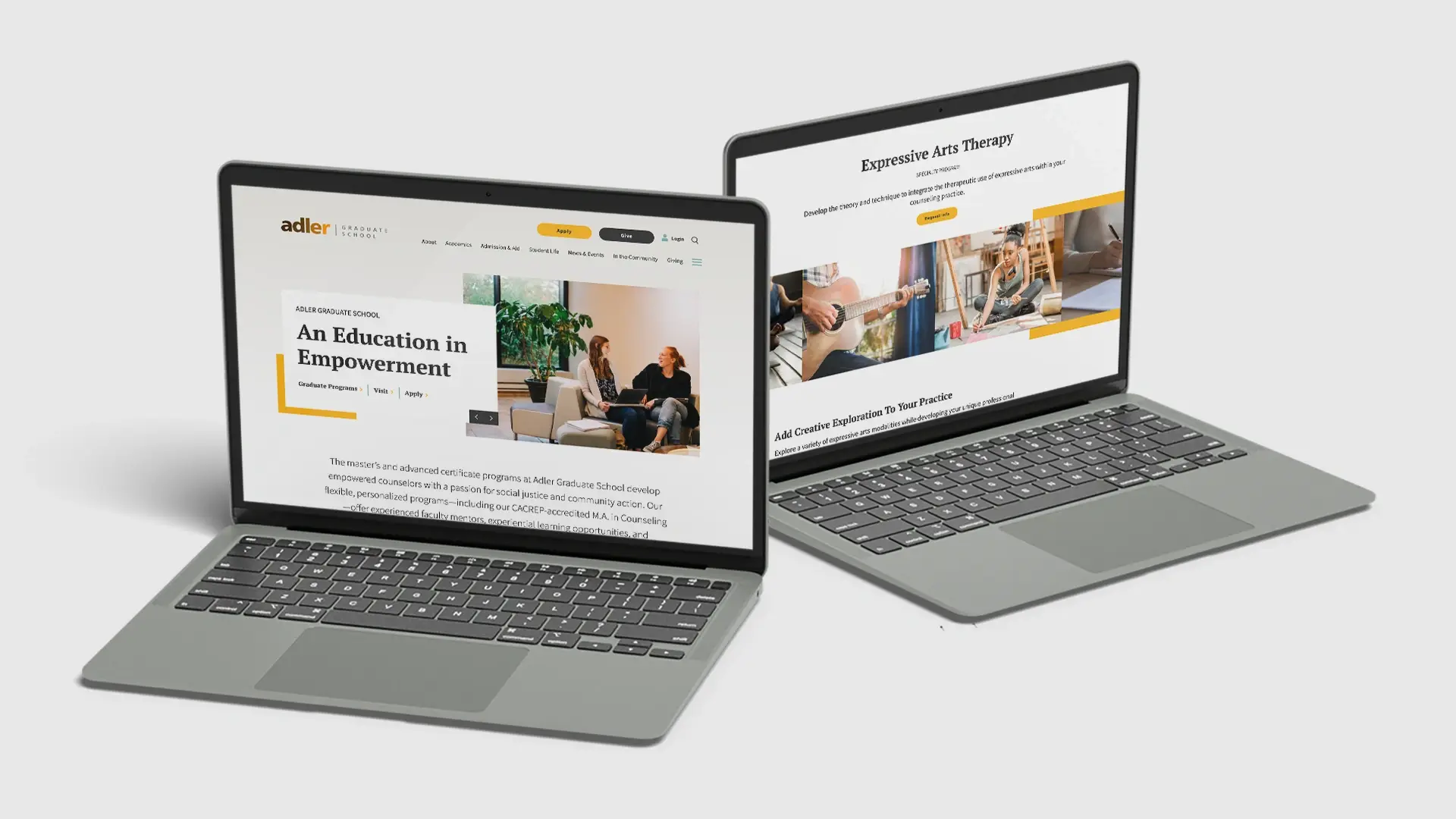
Adler Graduate School partnered with Spark451 to execute a full redesign of its institutional website, with the goal of attracting prospective graduate students and better reflecting the school’s mission. The previous site lacked intuitive navigation, mobile responsiveness, and clear messaging around program offerings. Our team led a strategic overhaul—including UX research, content strategy, and responsive web design—to create a student-centered digital experience that emphasized inclusivity, social justice, and community impact. The result is a modern, accessible higher education website that supports enrollment goals and clearly communicates Adler’s unique approach to counseling and mental health training.
Services
- Web Design
- Information Architecture
- Wireframing
- Content Strategy
- User Research
- Documentation
Timeframe
August 2020 – October 2021
Role
Interactive Designer
Collaborators
Jason Lein, Gisella Anzaldi, Jaclyn Fede
Challenge
Position Adler Graduate School as a compelling choice for prospective students while simplifying key content areas such as academics, admissions, and program pathways. The new site needed to accommodate a broad range of audiences—including prospective and current students, alumni, and faculty—each with different needs and expectations. We also aimed to differentiate Adler from competing institutions by showcasing its unique commitment to equity, support, and community in a way that felt personal and empowering rather than institutional.
Research
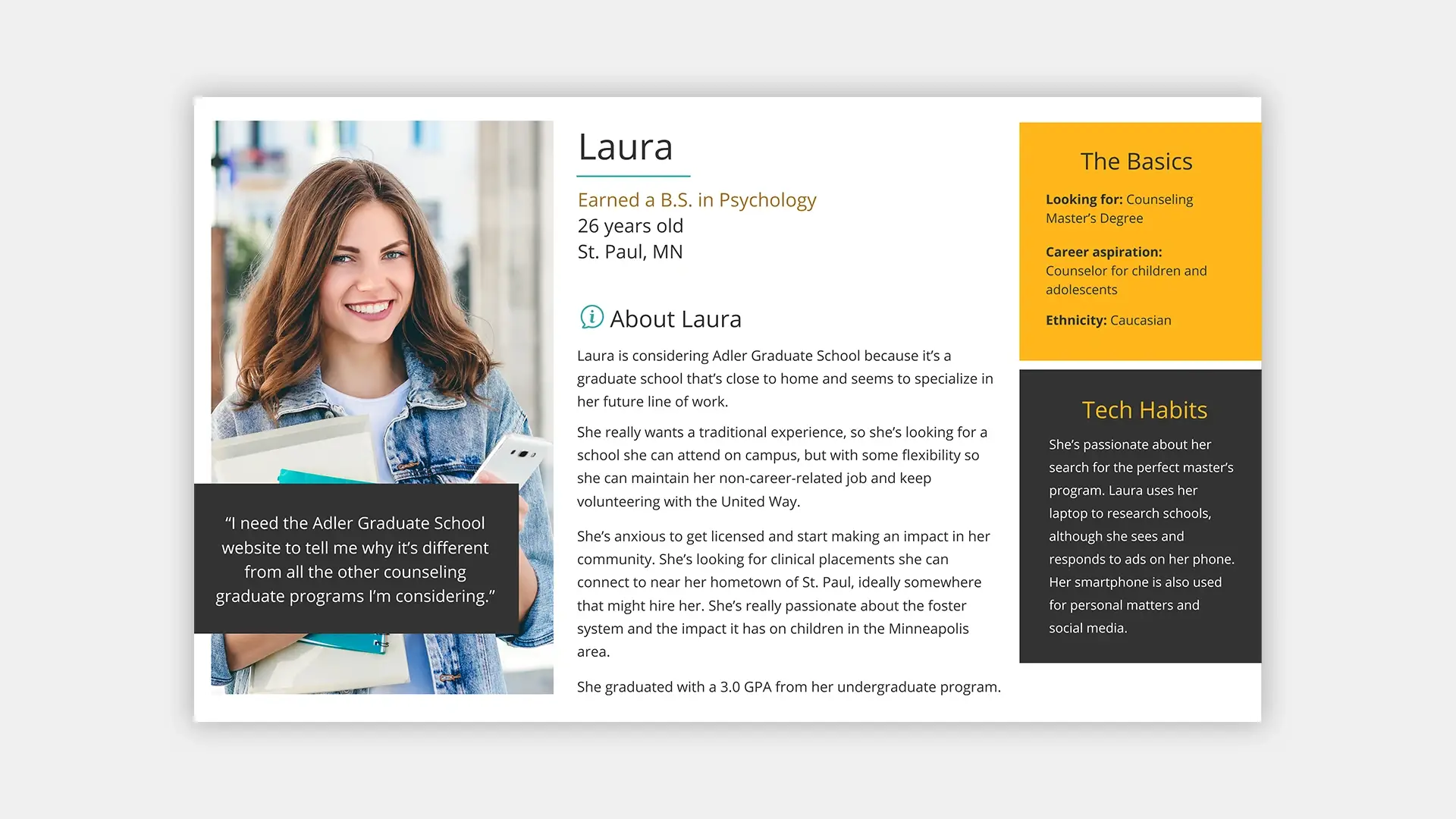
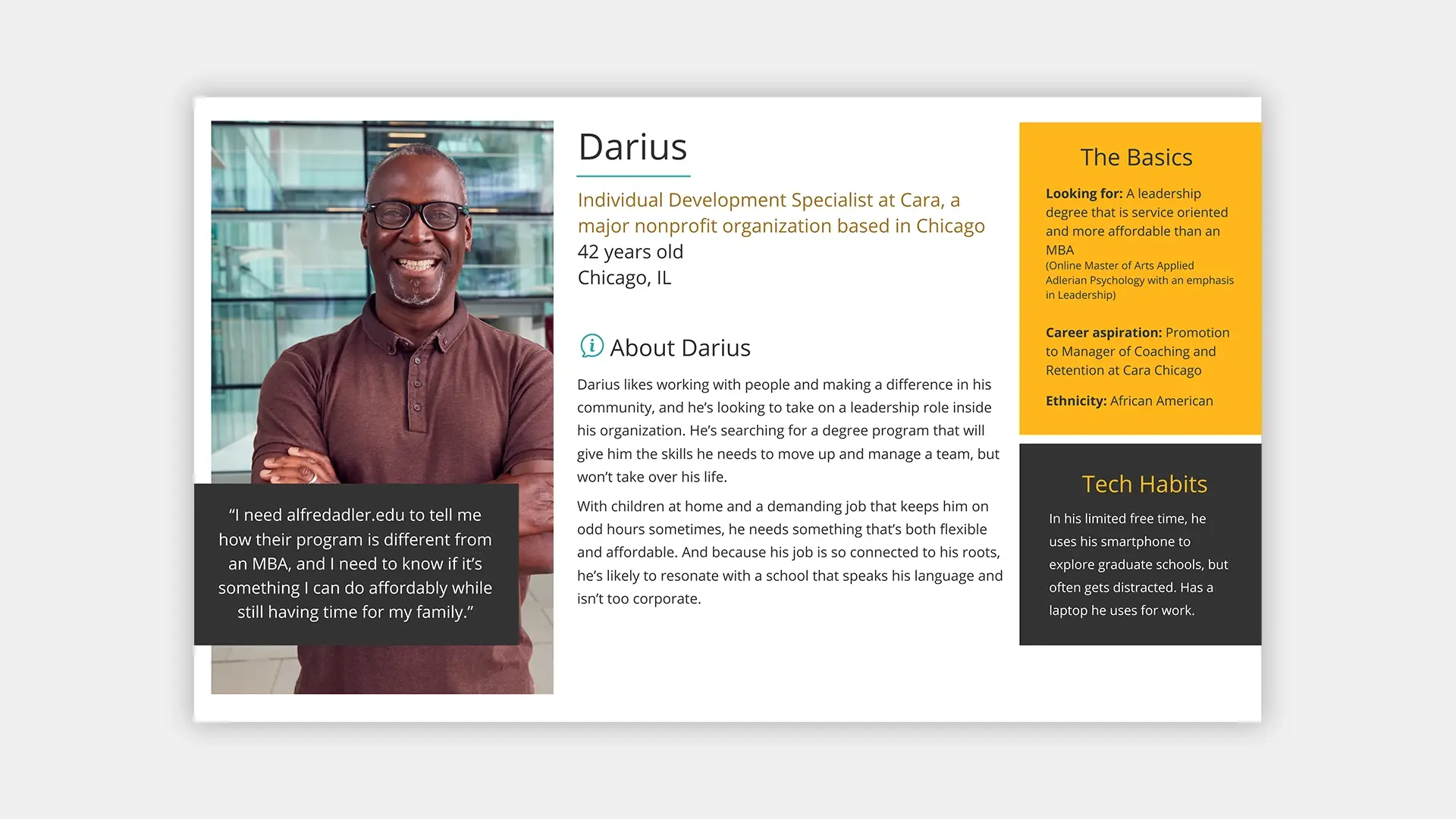
The project began with an extensive discovery phase that included stakeholder collaboration and quantitative and qualitative research. We conducted user surveys across a range of key audiences, including prospective students, alumni, staff, and faculty, to capture baseline attitudes toward the existing website and identify usability pain points. This research informed the creation of detailed personas, such as “Laura,” a recent psychology graduate seeking licensure, and “Darius,” a working professional exploring graduate programs to advance his nonprofit career. We also gathered competitive insights and internal documentation, including branding points and messaging guidelines, to ensure the new design would align with Adler’s institutional mission and tone.

Strategy
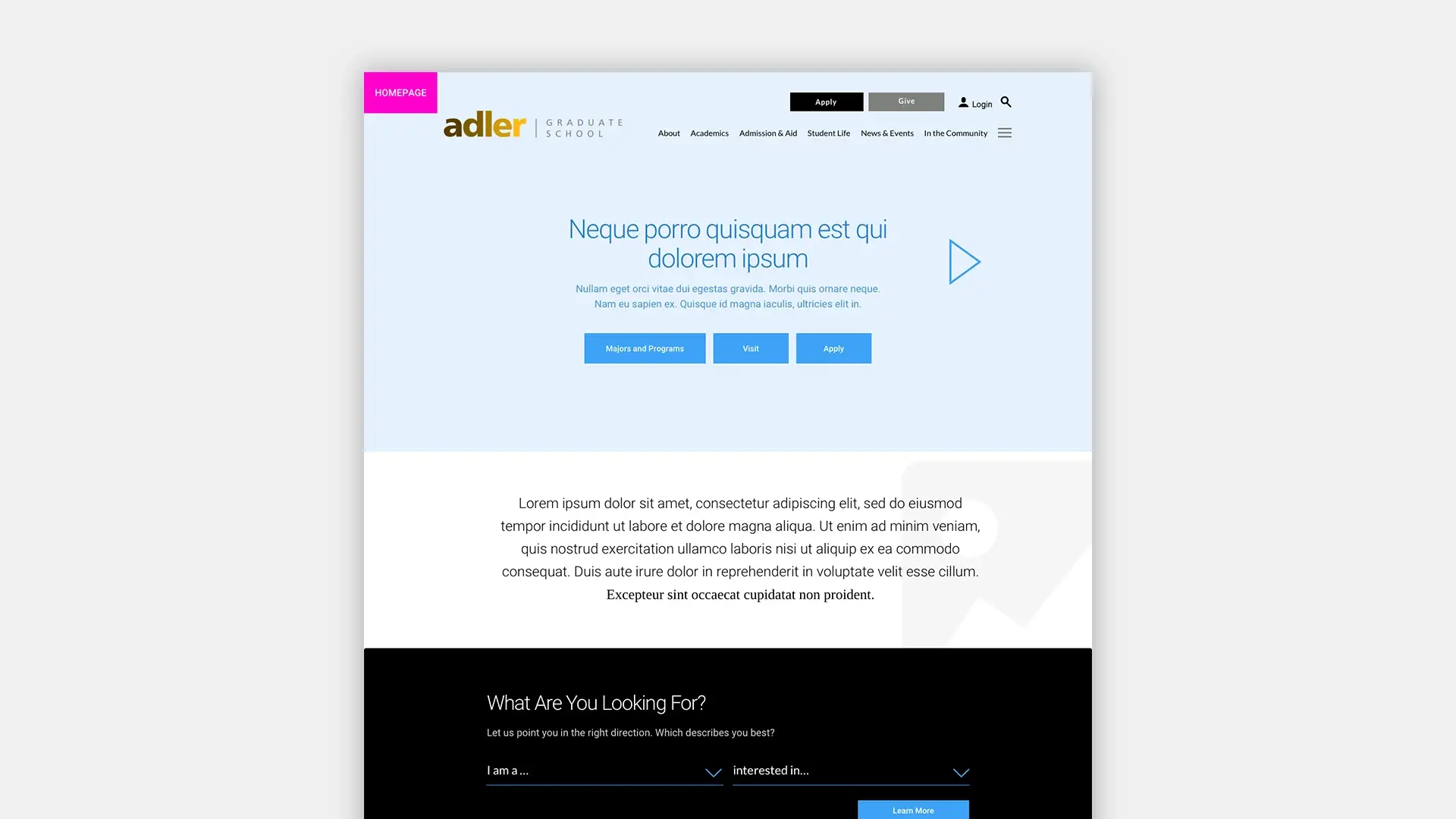
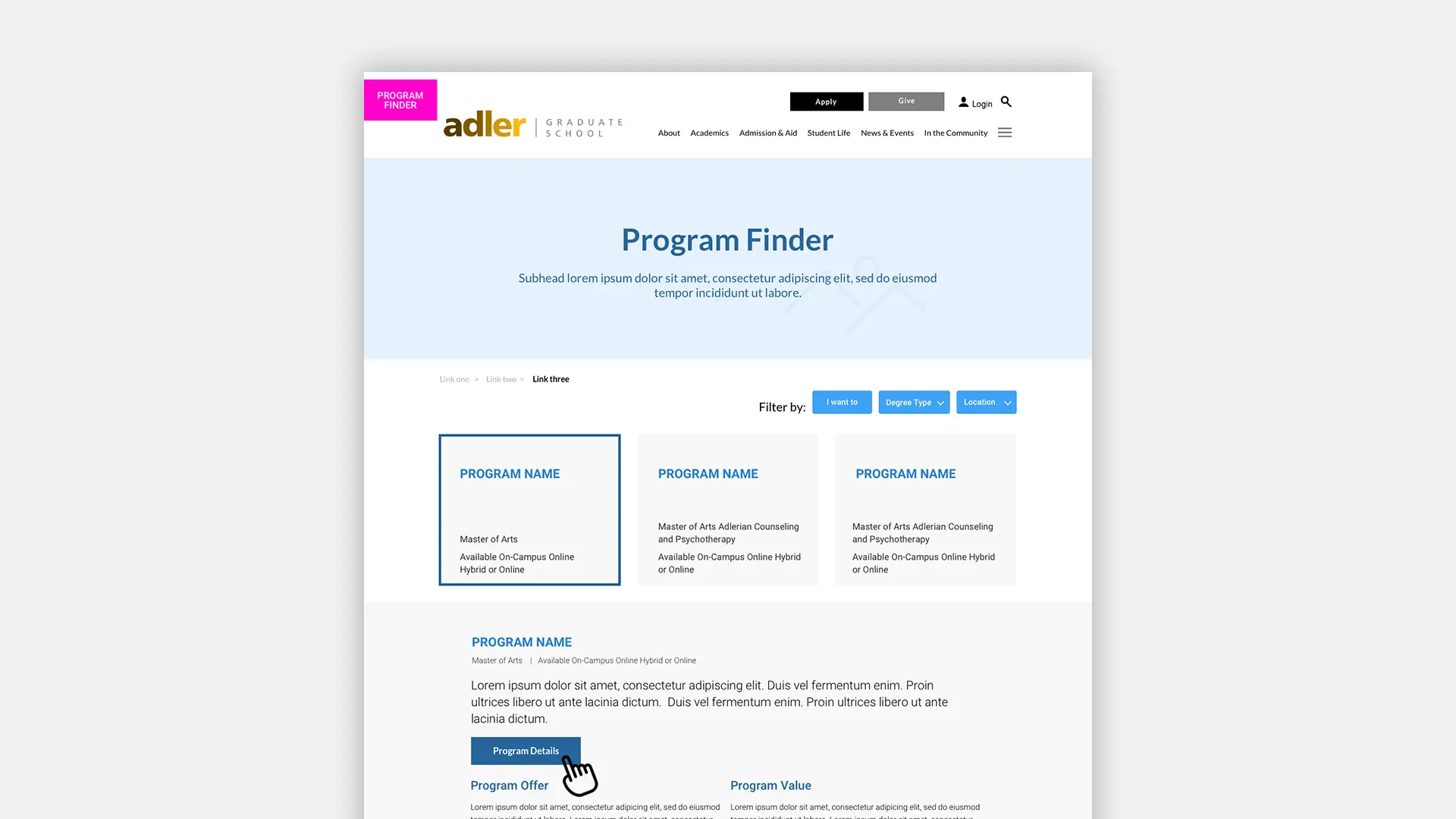
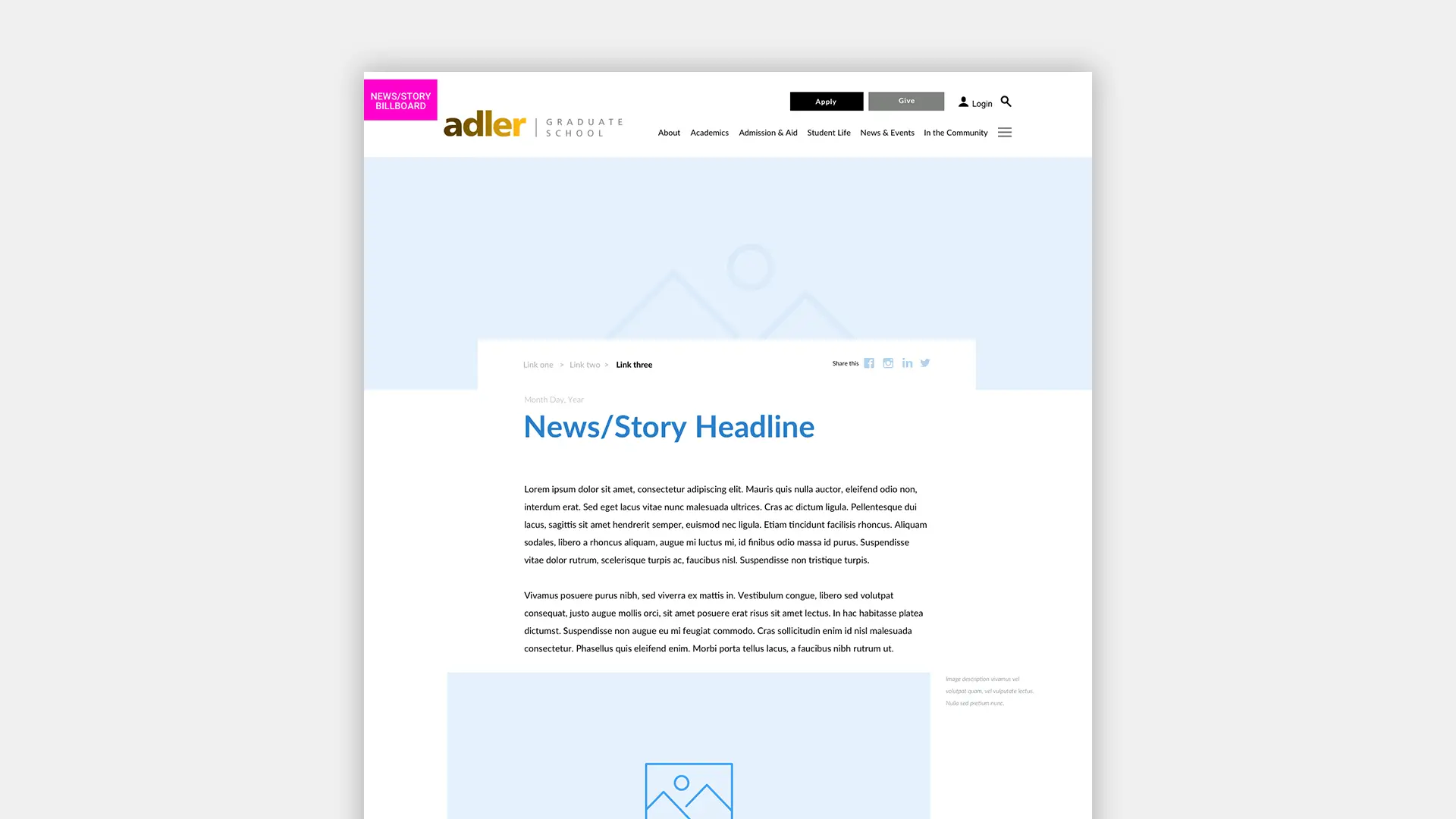
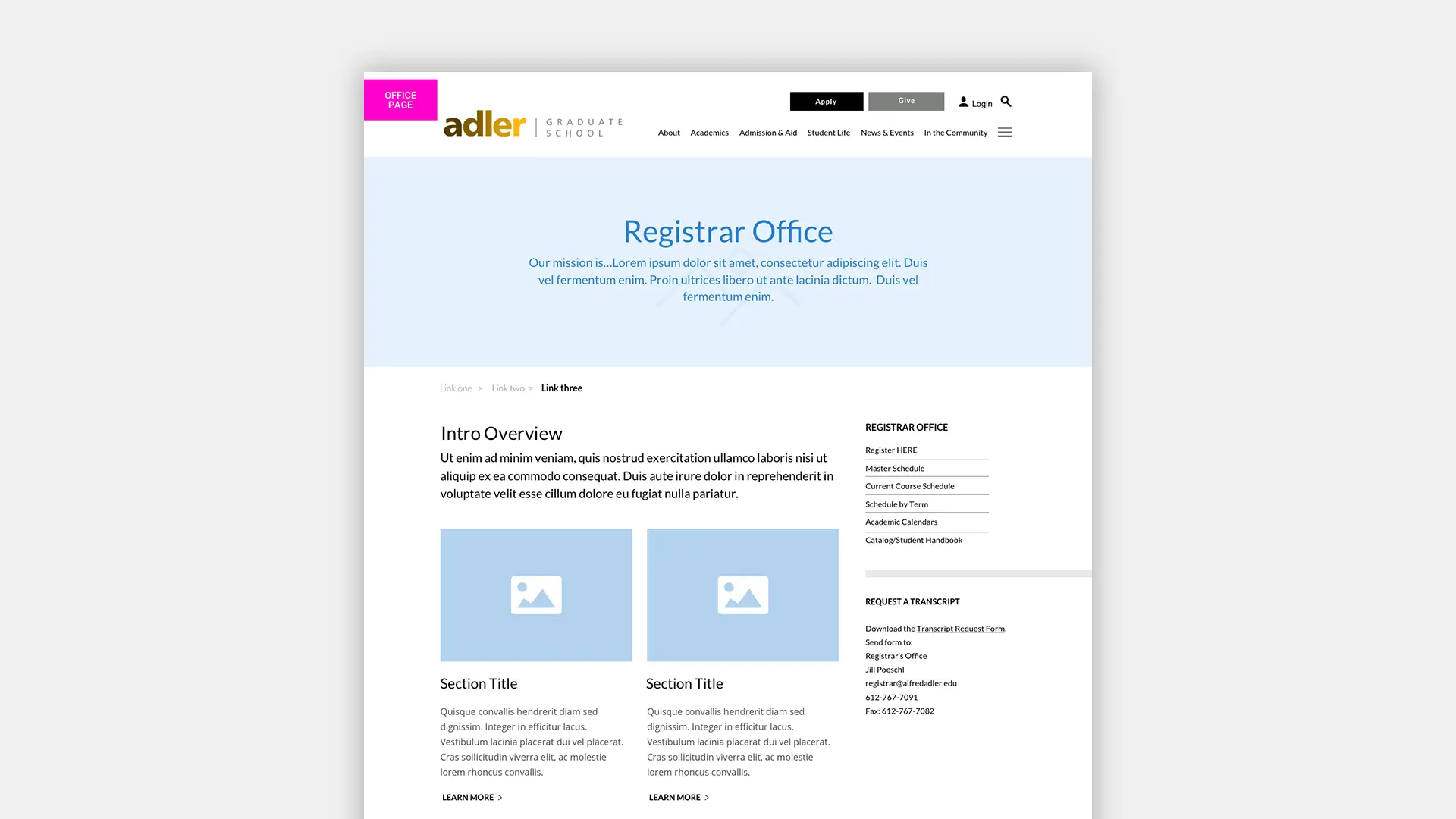
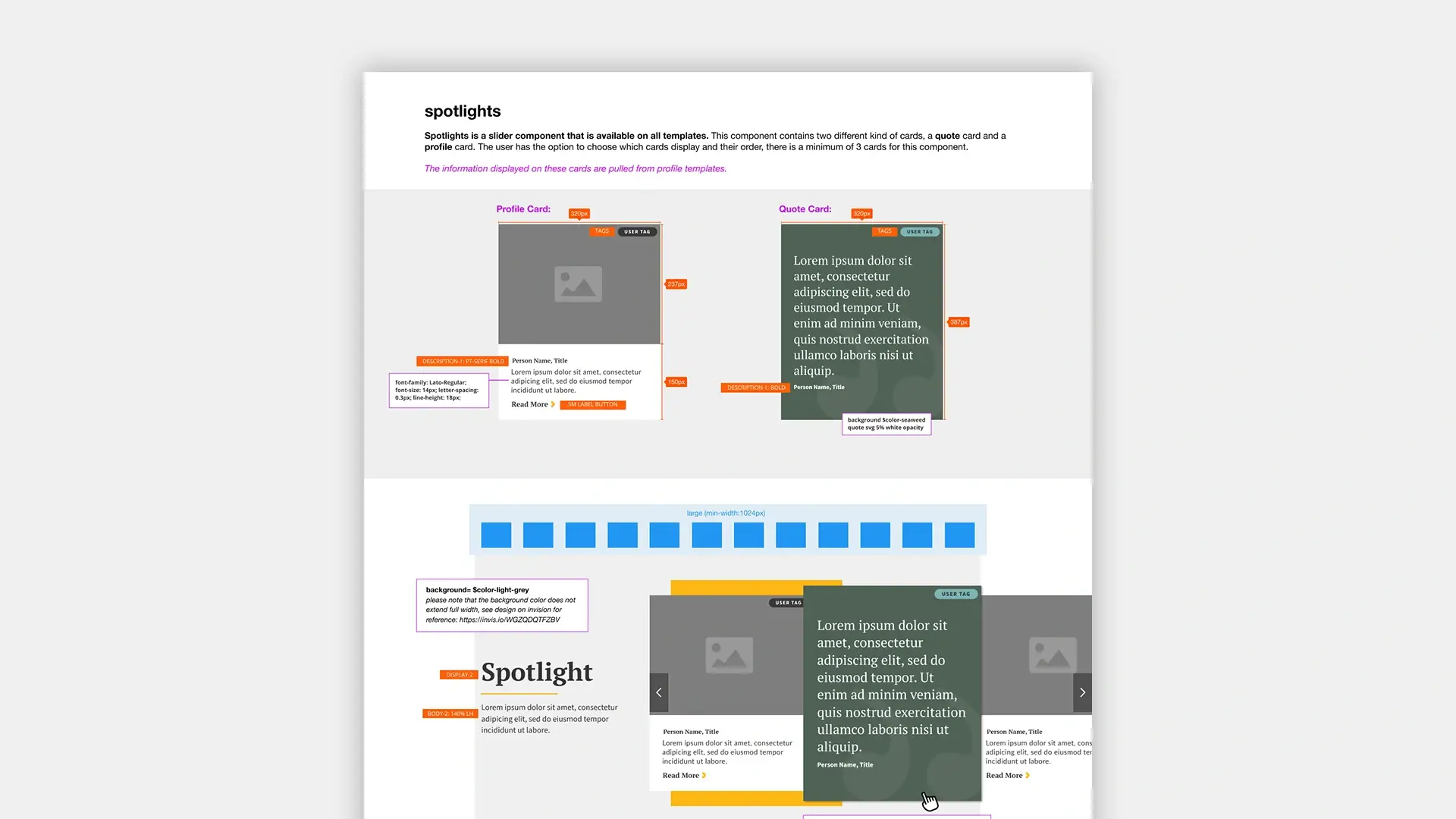
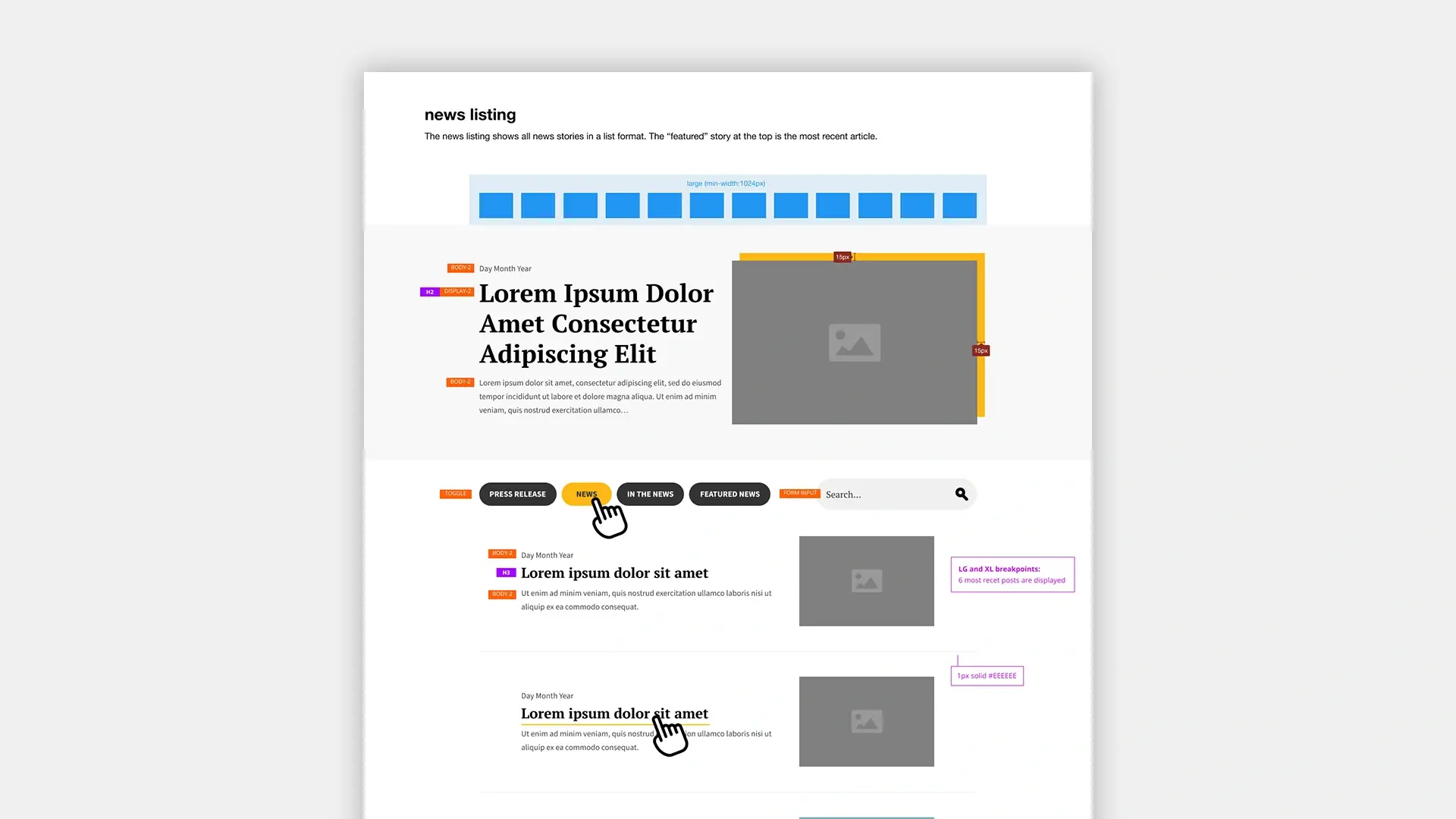
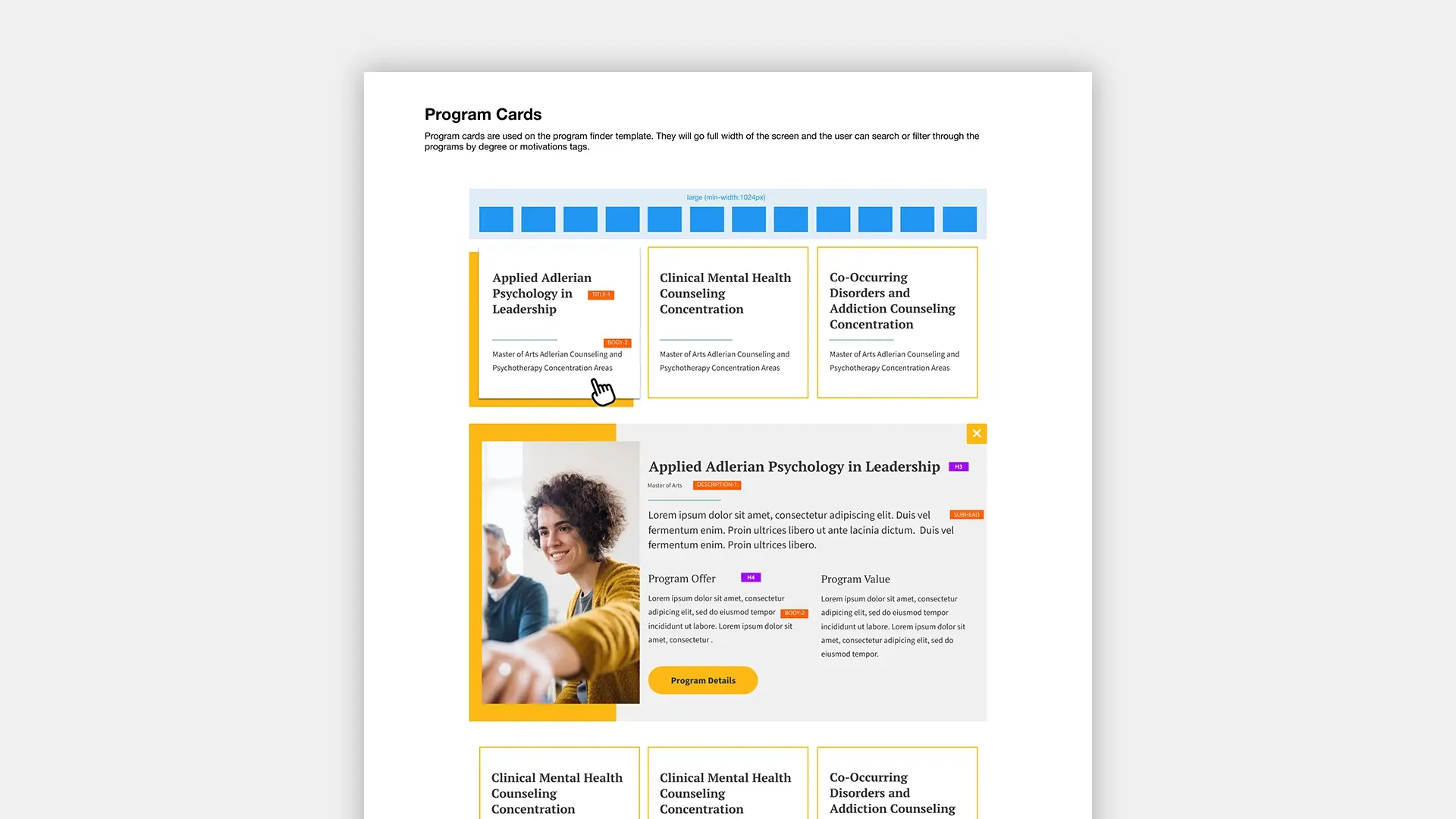
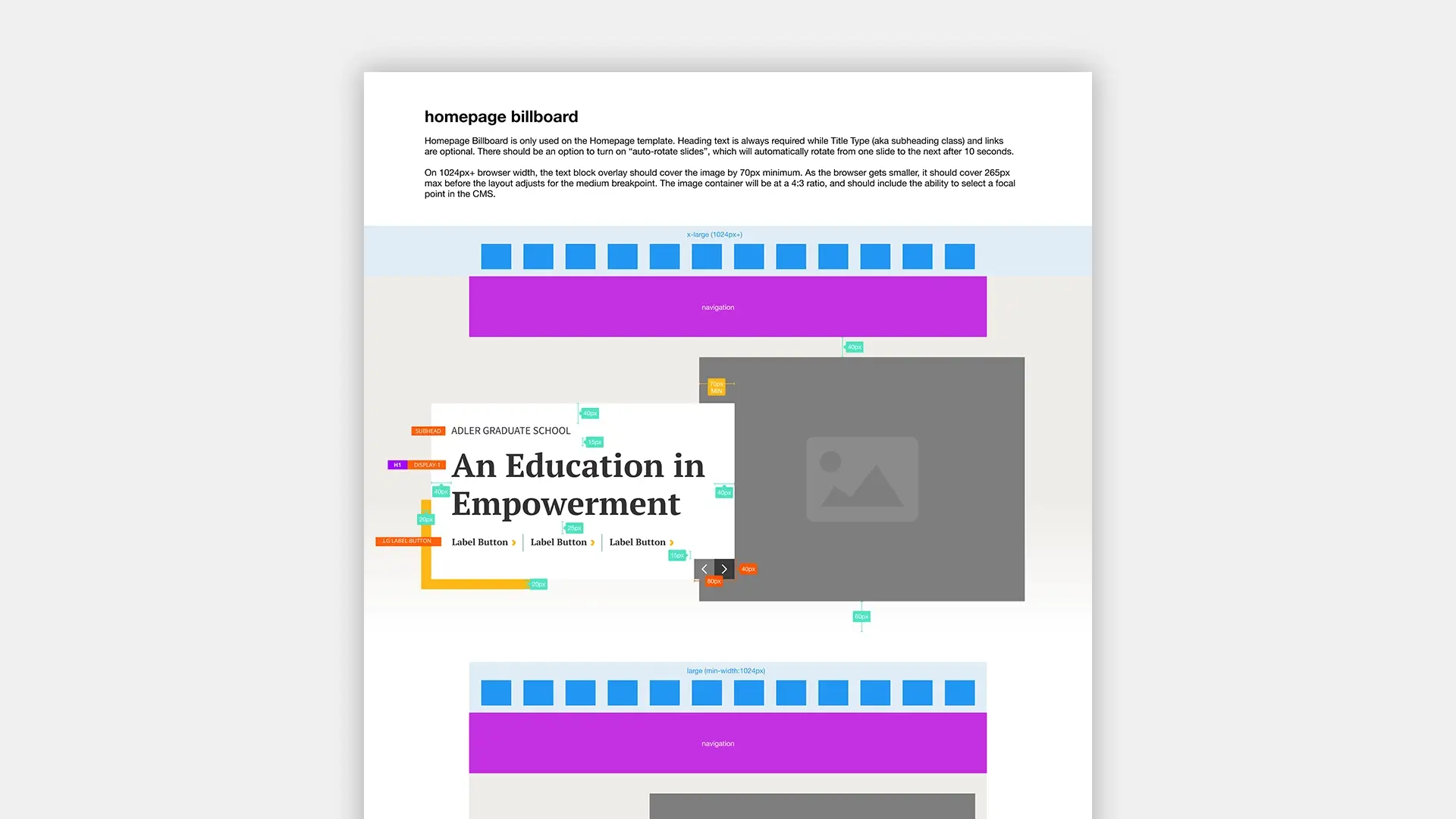
Following discovery, we developed a new information architecture to support streamlined, user-centered navigation. Our strategy emphasized content hierarchy tailored to the needs of time-constrained users, particularly prospective students seeking quick access to programs, admissions criteria, and support resources. Using modern design principles, we created modular templates that would be implemented in WordPress, enabling scalable content creation and easier internal content management. We also outlined content strategy frameworks based on audience segmentation, messaging tone, and accessibility standards to ensure consistency and clarity across the site. These efforts culminated in a set of annotated wireframes and an interactive prototype, providing a foundation for design and content development.
Design
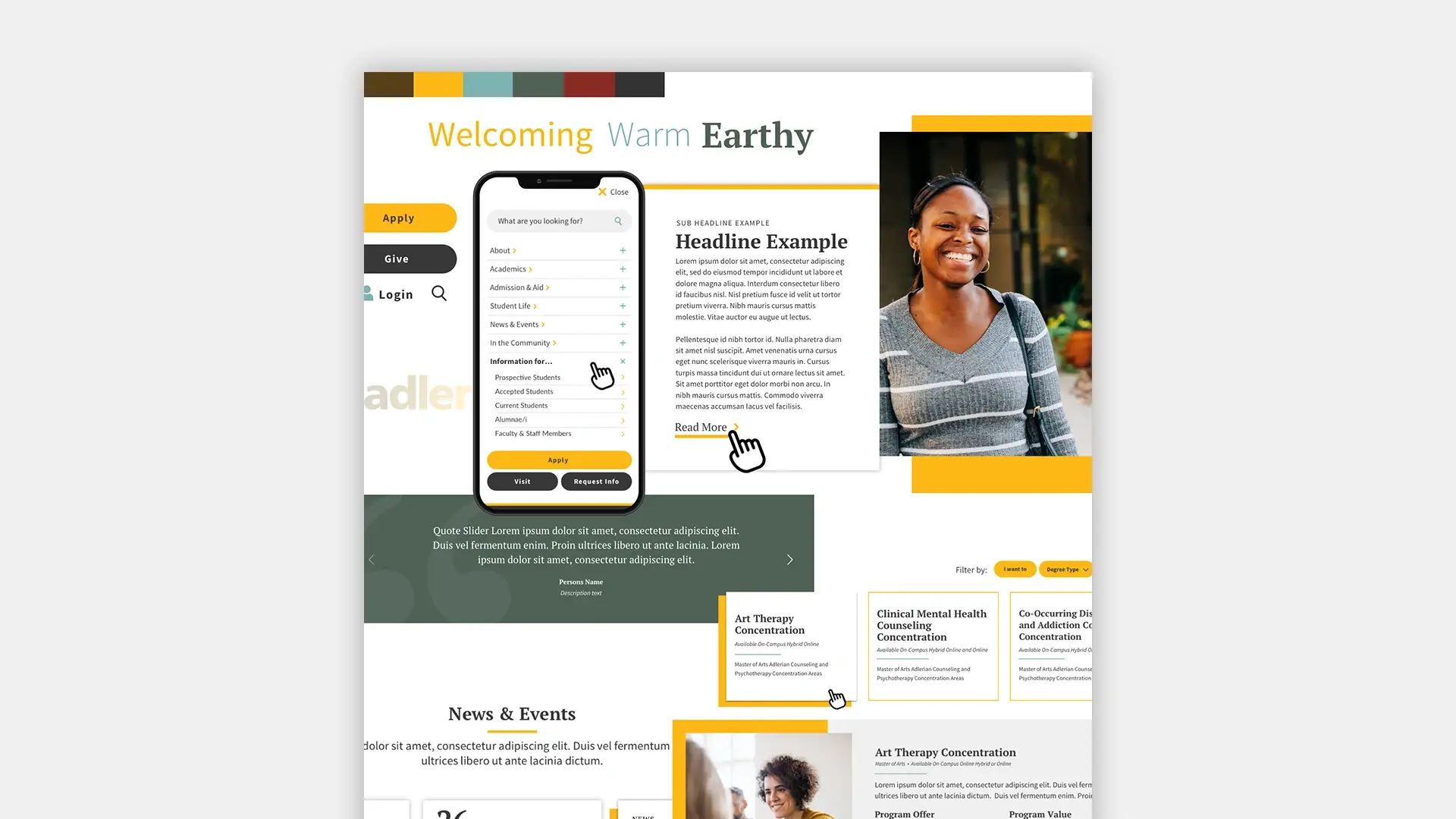
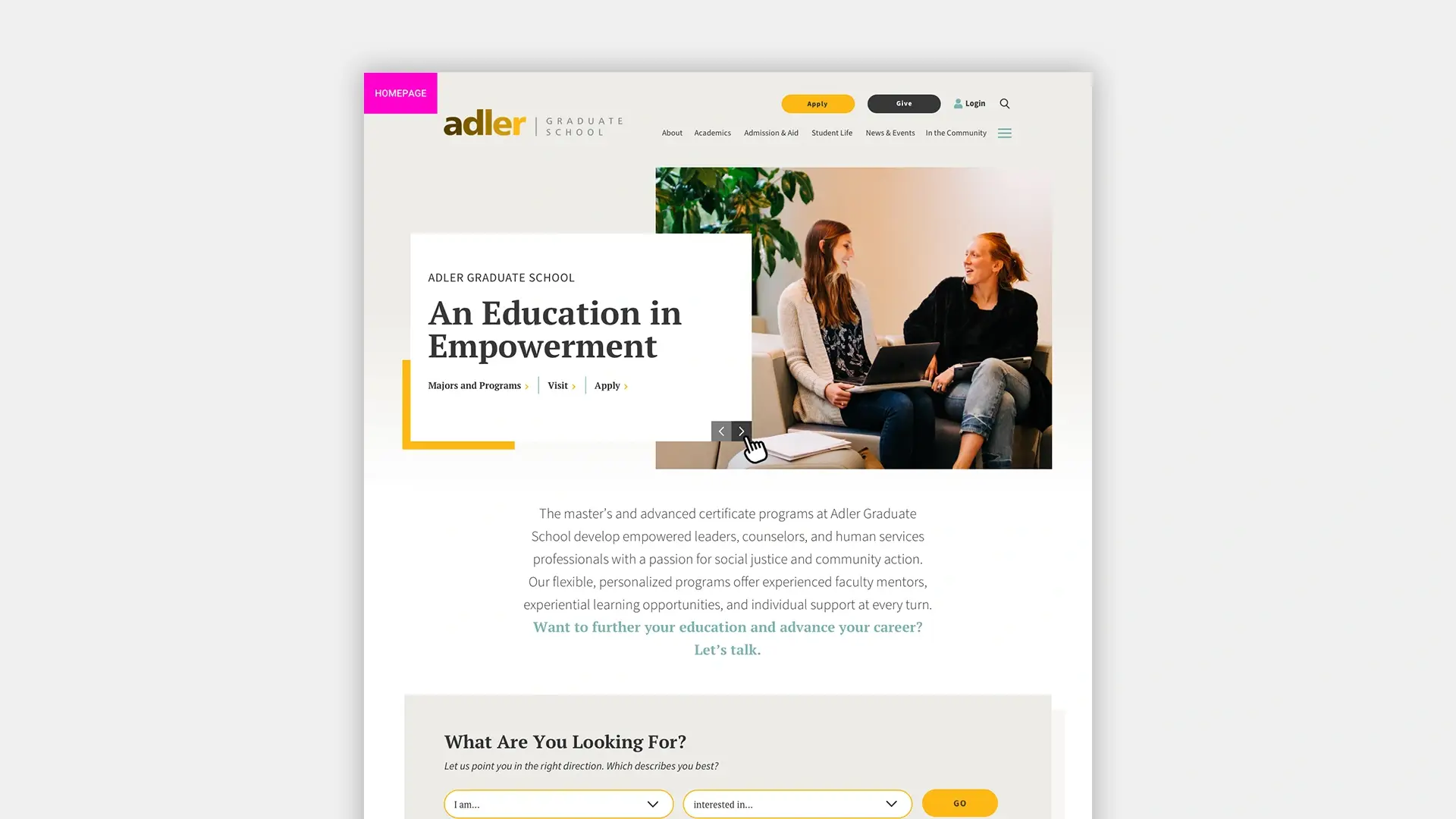
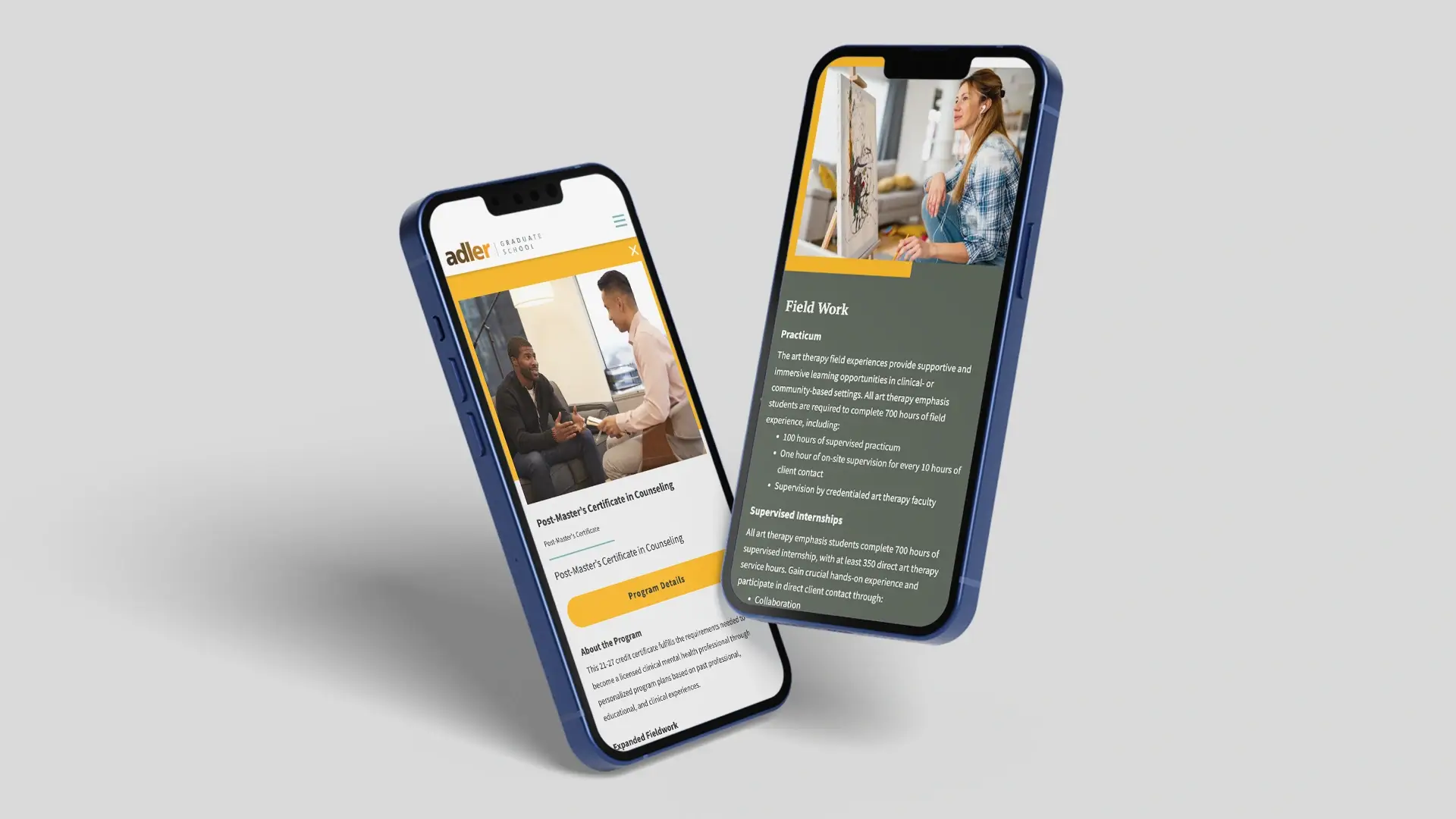
Drawing on Adler’s brand attributes—welcoming, supportive, and empowering—we created a visual design system that blended warmth with clarity. A mobile-first, responsive approach ensured accessibility and performance across devices, especially important for working professionals browsing on smartphones. The visual language integrated key messaging such as “You are empowered” and “You value action,” which we derived from Adler’s content tone guidelines. The user interface included custom iconography, consistent typography, and thoughtful white space to promote readability and emotional engagement. Early prototypes were tested internally and with stakeholders to validate design decisions, helping refine the experience before development began.
Build
As design wrapped, I worked closely with developers to ensure seamless handoff and proper implementation of our design system. I prepared pixel-perfect design specifications, component guides, and annotated layout files to support the build. The development team built the site using WordPress, employing custom content types for academic programs, events, faculty profiles, and news items. We ensured that accessibility requirements were implemented throughout the build, from semantic HTML to keyboard navigation support.
Outcome
The redesigned site supported Adler’s broader enrollment goals by aligning its online presence with its core values and strategic messaging. Improvements in navigation, content clarity, and mobile responsiveness created a more accessible and engaging experience for users across all devices. The modular design system provided flexibility for internal stakeholders to manage and expand the site without relying on a full redesign. While post-launch performance tracking was handled by Adler’s team, our work laid the foundation for ongoing growth by transforming the site into a high-converting, user-centered platform.
Let's Work Together
Got a project you’d like my help with? Reach out, and let’s do this thing!